Is the era of rapid growth in medical imaging procedure volume over? The volume of advanced imaging services delivered to Medicare beneficiaries decreased in 2009 -- the first decrease in 11 years, according to a study released Wednesday.
Washington, DC-based research and consulting firm the Moran Company found that the volume of advanced imaging services billed within the Medicare system decreased by 0.1% in 2009 compared with 2008, while overall imaging services declined by 7.1% for the same year-to-year comparison.
"It's pretty clear the era of very rapid growth in advanced medical imaging seems to have come to an end at this point in time," said Don Moran, president of the Moran Company. "All the data point to a leveling. It's unclear whether we will see further declines, but the prior growth of these modalities and the advantages they offer to clinicians seems to be peaking."
The study, released today by the Access to Medical Imaging Coalition (AMIC), reviewed Medicare claims data from 1999 through 2009, examining both spending and volume of advanced imaging services, such as CT, MRI, nuclear medicine, and PET, as well as overall imaging services, including mammography.
Declining Volume
The analysis also found that the total volume of mammography screenings decreased by 0.3% in 2009, compared with a 2.8% compound annual growth rate in the past decade. In addition, the total volume of dual-energy x-ray absorptiometry (DEXA) exams fell by 2.2%, while spending on this technique decreased by 16% from 2008 to 2009.
The new findings are comparable to a 2008 analysis of Medicare claims data that showed a 19.2% reduction in Medicare spending on advanced imaging from 2006 to 2007. It also revealed a significantly reduced procedure volume growth rate of only 1.9%, which was less than the overall rate of physician-payment growth.
In addition, a study presented by David C. Levin, MD, and colleagues at the 2010 RSNA meeting found that imaging procedure volume grew at a compound annual growth rate (CAGR) of 1.4% between 2005 and 2008, well down from the 4.1% CAGR experienced between 1998 and 2005.
Imaging industry observers have attributed the slowing growth rate to reimbursement cuts for medical imaging such as those enacted by the Deficit Reduction Act of 2005. The healthcare reform legislation passed in 2010 includes additional reimbursement reductions.
The study shows that "medical imaging has been decimated by these cuts," said Tim Trysla, executive director of AMIC. "The impact of these cuts, even by the government's own estimates, has 'de facto' caused access problems for patients and providers. We are very concerned about choking off the access to these lifesaving technologies."
John Patti, MD, a radiologist at Massachusetts General Hospital in Boston and chair of the American College of Radiology Board of Chancellors, said he and fellow radiologists are concerned with imaging's declining growth rate, because the Medicare population is increasing and the incidence and prevalence of disease remain the same.
Early Diagnosis
"One of the tremendous benefits of advanced imaging over the years is that it has obviated the need for more costly and evasive diagnostic evaluation," Patti said. "This reversal of trend suggests that Medicare patients may not be receiving those appropriate exams and thus the benefit of early diagnosis."
In addition, he said the decrease may have "negative downstream effects on the health of our aging citizens and on the cost of providing the more complex care that may be necessary to treat disease if it is discovered in advanced stages."
One potential victim of the decline is outpatient imaging center owners and operators. Because of reimbursement cuts for outpatient imaging, some physicians have sold or given their imaging activities to hospitals, which are reimbursed at a higher rate under the Hospital Outpatient Prospective Payment System (HOPPS). That scenario, in turn, could lead to less access to advanced imaging services.
In other study data, Medicare spending for advanced imaging services increased by less than half the spending growth for physician services overall. With a 1.2% increase in spending for advanced imaging, compared with 2.6% for services overall, imaging was one of the slowest-growing segments of the physician fee schedule in 2009.
Some Optimism
Despite the volume downturn in 2009, Trysla believes that advanced medical imaging will continue to contribute to patient care. "Medicine will not turn its back on advanced technology, especially with the benefits of early detection of disease, such as Parkinson's disease and cancer," he said. "I think you will see growth through new applications in technology, and medicine will continue to evolve from exploratory surgery toward early and more exact detection."
ACR's Patti also speculated that the dip in growth in 2009 would be temporary. "I don't think there are any physicians who are taking direct care of patients who don't understand the value of advanced imaging," he added. "And, I don't think there are any physicians who are willingly withholding [advanced imaging] from patients."
by : Wayne Forrest
Showing posts with label Boston. Show all posts
Showing posts with label Boston. Show all posts
Friday, February 11, 2011


Wednesday, November 24, 2010
Blow
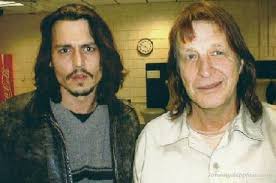
I was busted. Set up by the FBI and the DEA. That didn't bother me. Set up by Kevin Dulli and Derek Forreal to save their own asses. That didn't bother me. Sentenced to 60 years at Ottisville. That didn't bother me. I'd broken a promise. Everything I love in my life goes away.
George Jung
Wednesday, October 6, 2010
Fielding A Dream
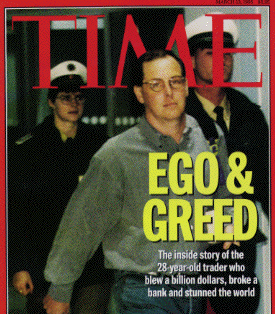
The Boston Red Sox completed one of the most storied seasons in baseball history in 2004 by coming back from a 3-0 deficit to defeat the New YorkYankees and then sweeping the St. Louis Cardinals in the World Series to break a“curse” dating back to 1918. As he has done with his trading, owner John Henry has infused his long-term thinking into the Red Sox system. It goes far beyond bringing in a left-handed pitcher to face a left-handed batter, to include selecting the right players and the right tactics for situations based on probabilities.
Henry is actively involved in both JWH, his money management firm, and the
Red Sox, but gives much of the credit for success in both areas to outstanding staff members such as Mark Rzepczynski, president of JWH, who has been with the firm since 1998, and the front office team of the Red Sox.Here's CME journal's interesting interview with John W. Henry:
CME: First of all, congratulations on your success with the Red Sox. It’s an amazing story. A lot of Clubs fans in Chicago wish they could have some of that magic.
JWH: Yes, it was a gratifying year.
CME: Let’s get right into your trading career.What got you interested in trading futures in the first place?
JWH: My father and mother were farmers in Arkansas. When my father died in thelate 1970s, I decided that I needed to understand agricultural markets. So I spent a few years studying markets, game theory and probability. I was immediately fascinated with market movements. I retain the same fascination today.
CME: You have been described in The New York Times and elsewhere as “a cerebral man with a head for mathematics.” But how did you learn to trade futures – books,trial-and-error . . . ?
JWH: Early on I read Reminiscences of a Stock Operator, the autobiography of Bernard Baruch, and the writing of W.D. Gann. I was particularly taken with Gann’s philosophy. I had been a student of philosophy and quickly began to find a bias toward trading philosophy over and above results. I always distrusted results in the commodity markets and eventually across all markets.Life is too dynamic to place a lot of credence in the past results of any program or any trader. I strongly felt that the key to success in markets over the very long term was in having a valid philosophy of the markets that could not be shaken by results over the short or intermediate term. I equated this with valid philosophies in other areas such as business principles that endure regardless of cycles. With any valid philosophy in any field, there are going to be periods in which doing the right thing every day appears to be counterproductive.
If Keynes said, “In the long run, we are all dead,” I would say, “Remaining true to your principles, if they are valid, will produce great results over the long run.”
CME: What were your early experiences in trading like? Did you start with big losses and then decide to figure out what trading was all about, as some well-known traders have done?
JWH: I started with a diversified portfolio called the “Original Program.” The first week of trading was in June of 1981. I was so confident in my research and philosophy that I left the country and left stops with my broker. After dinner one night in Oslo that first week, I saw a chart on the front page of the Financial Times. It was an amazing chart that showed the price of coffee had skyrocketed. I knew I was short.
I called my broker and he said, “You know, you are on to something. We’re limit up every day in coffee going against us, but we’ve made money every day you’ve been gone.”
CME: What markets did you trade in your early days?
JWH: Soybeans, 30-year U.S. bonds,gold, British pounds, Japanese yen,copper, wheat, sugar, coffee and cocoa at the very beginning.
CME: As you began to evolve as a trader, how did you develop your trend-following trading approach?
JWH: I did not have access to computers.PCs were just coming out. I didn’t have a desire to find the holy grail by testing different methodologies. I came up with a philosophy of very long-term trend-following. I knew the approach would be very profitable, but I also knew the nature of long-term trend-following is to have volatility.
CME: How has your basic approach changed over the years?
JWH: It hasn’t. Portfolios have changed as the markets have expanded. Programs have been added. But the basic philosophy is the same.
CME: How many different trading programs does JWH offer today?
JWH: JWH offers 11 different trading programs to investors. Our diversified portfolios are the Original Investment Program, Global Diversified Portfolio
and the Global Analytics Family of Programs. Our financial portfolios include the Financial and Metals Portfolio, Global Financial and Energy Portfolio and Worldwide Bond Program.
Our foreign exchange programs are the International Foreign Exchange Program, the G-7 Currency Portfolio and the Dollar Program. Additionally,we offer two trading programs that combine the others – the Strategic Allocation Program, which can invest in any of the other programs, and theCurrency Strategic Allocation Program,which limits itself to the foreignexchange-only programs.
CME: How do you “sell” your managed futures programs as an asset class to these clients?
JWH: The primary benefit of managed futures is the low historical correlation to traditional assets. Our programs have done especially well during periods of market stress or dislocation. This is when you have strong market trends. Our market selection and our investment methodology combine to give a return
stream that is unlike a traditional long only portfolio of equities and fixed income instruments.
CME: With the spectrum of instruments available, what is your view about trading futures instead of cash markets – specifically, in FX(Foreign Exchange)?
JWH: Futures offer a uniformity and transparency not found in many cash markets. That having been said, we have not been as active in FX futures markets. This is primarily due to the liquidity available in cash FX markets.Nevertheless, we have seen a significant increase in volume and liquidity at the CME from electronic trading. This is causing us to reevaluate our trading atthe CME, especially for any active trading program.
CME: What are the most significant changes that you have seen in futures trading and in managed futures since the early 1980s?
JWH: Electronic trading has been the most significant change in futures trading. It is so much easier to access the market and transact trades. The influx of competitors to the managed futures field has been significant to our industry. There are more managed futures managers and global macro managers who use futures as a means of diversification and profit opportunity.There also has been a shift of emphasis towards shorter time horizons for trading as a result of the decreasing execution costs. There is less emphasis on long-term trend-following, which is our specialty.
CME: What developments do you see coming in futures/options trading?
JWH: Technology’s emergence into a predominant position in our industry is something that is ongoing in our industry. Another development I see on the horizon is the return of markets that will look very different from the low-volatility situation to which many traders have become accustomed.
CME: What developments would you like to see in futures/options trading?
JWH: We are constantly looking for new markets to trade. With developments in electronics, the cost of entering new futures markets is much lower. We hope to see new products at CME.We also look forward to new market participants in futures trading. This clearly adds to liquidity,which is good for everyone.
CME: In view of your baseball success in addition to your trading success, we have to ask a couple of baseball questions.What was your baseball background as a player or coach?
JWH: I played second base in Little League. I set a strikeout record at the Chicago White Sox Boys Camp in 1960…as a hitter !
CME: What prompted you to get into baseball ownership?
JWH: The investment business can be very insular. Owning a baseball team deeply connects you to important aspects of a community. And if you are a sports fan, there can be no greater dream than to own a team and become a participant. Of course, I don’t make player decisions.I’m not qualified to run a baseball team. So I am fortunate to have a brilliant general manager and a tremendous CEO.
Buying the Red Sox and winning a World Series with great partners was a storybook opportunity and a great accomplishment for an organization that had come so close over many decades. I owned part of the Yankees for a decade, so I knew exactly what we were up against. It’s the greatest rivalry in sports. Being a lifetime baseball fan and having a great love for markets, I’m incredibly lucky to have the Red Sox and JWH.
CME: With such success in two diverse areas, what relationship do you see between successful trading and putting together a successful baseball team?
JWH: There are a number of dissimilarities that people don’t want to hear about. But there are a few principles that guide both the Red Sox and JWH.It’s important to have a plan, remain disciplined in executing that plan and pay attention to what is actually happening rather than what you expect to happen. We try to be as objective as possible in our analyses. I’m a stickler for that. Some may see objectivity as
impossible. But that’s why systematic approaches make sense. It’s not always easy for people who are involved every day to stay with a plan when misfortune occurs for a time.You always encounter the unexpected, and this can push discipline right out of the way in the name of prudence. But prudence almost always dictates staying with the approach that has made you successful. I see that as one of my primary roles. I often encourage everyone during difficult days to be patient.I don’t blame people for the unexpected.
Every time JWH struggles – and that is usually annually – people ask if the markets have changed. I always say,“Yes, the markets have changed. That is the nature of markets, and that is why we have been successful over the long term.The nature of trend-following is to adjust to changing market conditions.”
Subscribe to:
Posts (Atom)