in World War II only 15 to 20 percent of riflemen ever fired their guns. The rest? Running messages, helping people load ammunition, tending to buddies—but not aiming a rifle at someone nearby and pulling a trigger. Psychologists of warfare emphasize how, in the heat of battle, people don’t shoot another human out of hatred or obedience, or even from knowing that this enemy is trying to kill them. Instead it’s the pseudokinship of bands of brothers—to protect your buddies, to not let the guys next to you down. But outside those motivations, humans show a strong natural aversion to killing at close range.Sapolsky, Robert M.. Behave (p. 645). Penguin Publishing Group. Kindle Edition.
Showing posts with label Biology. Show all posts
Showing posts with label Biology. Show all posts
Tuesday, December 7, 2021
An Excerpt from Behave


Tuesday, December 11, 2012
Trade Offs Between Being Smart and Not Being Smart

Humans don't have a monopoly on being smart: many other animals, including birds, can solve problems and even make and use tools.
But does it always pay for animals to be brainy or are there hidden costs?
A recent study of great tits, published in Current Biology, gives an insight into the trade-offs between problem-solving abilities and other traits. The work was conducted by Ella Cole of Oxford University's Department of Zoology and Julie Morand-Ferron and led by John Quinn. I asked Ella about birds, brains, and strategies…
OxSciBlog: What makes great tits good for studying problem-solving?
Ella Cole: Great tits are well-known for their ability to problem-solve in order to find food, ranking among the top 20 most innovative avian species. This ability to solve novel problems or find new food sources may be one reason why great tits are able to survive in such a variety of different habitats.
Ella Cole: Great tits are well-known for their ability to problem-solve in order to find food, ranking among the top 20 most innovative avian species. This ability to solve novel problems or find new food sources may be one reason why great tits are able to survive in such a variety of different habitats.
In our work with the tits, we try to establish whether good and poor problem solvers differ in how they forage in the wild and how successful they are at reproducing. Our problem solving trials are carried out in captivity under standardised conditions. We therefore need to test large numbers of individuals as we cannot be certain how many birds we will be able to find again once they are released back into the wild.
Great tits are an excellent study species because they can be caught in large numbers, easily adapt to captive conditions and take to nest boxes allowing us to monitor their foraging behaviour and breeding success in the wild.
OSB: What links did you find between problem-solving and successfully raising offspring?
EC: We found that females that could problem-solve in captivity laid more eggs than their non-solving counterparts when released back into the wild. If their nests did not fail, these solvers also fledged more chicks than non-solvers.
EC: We found that females that could problem-solve in captivity laid more eggs than their non-solving counterparts when released back into the wild. If their nests did not fail, these solvers also fledged more chicks than non-solvers.
Even though the quality of food fed to chicks did not differ between solvers and non-solvers, solvers had much smaller foraging ranges and foraged for less time each day than non-solvers, suggesting they may be generally more efficient at finding food.
Interestingly though, female problem-solvers were more likely to desert their chicks than non-solving females, leading to no overall fitness difference between solvers and non-solvers. These findings provide the first convincing evidence that problem-solving abilities may influence reproductive success in wild populations.
OSB: What do your results tell us about the costs of being smart?
EC: Our finders suggest there may be costs as well as benefits to being smart. We find that problem solvers are more likely to desert their nests, which is a common adaptive behaviour amongst birds in response to unfavourable conditions.
EC: Our finders suggest there may be costs as well as benefits to being smart. We find that problem solvers are more likely to desert their nests, which is a common adaptive behaviour amongst birds in response to unfavourable conditions.
Although their offspring will die, deserters can preserve their resources for themselves and therefore breed again when conditions may be more favourable. We show that desertion in our population may be a direct response to trapping by field workers – a procedure that is carried out in order to establish the identities of breeding birds (via reading their unique leg bands).
It is likely therefore that solvers may be more sensitive to human interference at the nest (which they are likely to perceive as a predation attempt), indicating that they are generally more cautious or anxious than non-solvers.
Why might 'being smart' not always be the best strategy?
EC: Being smart is costly. In humans, for example, the brain only accounts for 2% of an adult’s body weight, but it consumes about 20% of the resting metabolic rate [Clarke and L. Sokoloff 1999].
EC: Being smart is costly. In humans, for example, the brain only accounts for 2% of an adult’s body weight, but it consumes about 20% of the resting metabolic rate [Clarke and L. Sokoloff 1999].
As resources are limited in nature, energy spent on the brain must be diverted from something else such as maximising body size and strength. Therefore although in some environments it will pay to be brainy, in others animals may benefit instead by investing resources in being good at competing or fleeing predators.
Whether being smart is favoured by selection is therefore likely to depend on the specific selective pressures acting in a given environment. In a previous study we showed that problem solver great tits are poorer at competing for limited food resources than non-solvers, and in the current study we find that solvers may also be more timid. These correlations provide support for the idea that trade-offs may exist between problem-solving ability and other traits linked to fitness, and therefore that being smart may not always be the best strategy.
What further studies are needed to explore the link between 'smarts' and 'success' in great tits?EC: Our paper provides an important first step to understanding how selection may act on individual variation in cognitive performance in animal populations. However, more work is needed to understand exactly how being a good problem solver helps animals do well in the wild: for example, are they better at finding novel food sources when most needed, or are they quicker generally at learning to cope with challenges in their environment?
Another useful area of research will be to further explore the costs of being smart. In our paper we show that solvers are more sensitive to disturbance at the nest than non-solvers, leading to high nest failure, but whether they also show a stronger response to natural predation attempts remains to be tested.
Finally, it will also be very interesting and informative to explore how different types of cognitive traits (such as learning ability) relate to fitness, and to test the prediction that the costs of being smart will lead to high cognitive performance only being favoured in environments that are especially cognitively demanding.
by : Pete Wilton
@ox.ac.uk
Saturday, April 30, 2011
Appeals Court Overturns Stem Cell Research Ban

Opponents of taxpayer-funded stem cell research lost a key round in a U.S. appeals court Friday.
In a 2-1 decision, a panel of the court of appeals in Washington overturned a judge's order that would have blocked taxpayer funding for stem cell research. The judges ruled that opponents of taxpayer-funded stem cell research are not likely to succeed in their lawsuit to stop it.
The panel reversed an opinion issued last August by U.S. District Judge Royce Lamberth, who said the research likely violates the law against federal funding of embryo destruction.
"We're thrilled with this decision and look forward to allowing federally funded scientists to continue with their work without political constraints," said Sean Tipton, a spokesman for the American Society for Reproductive Medicine.
Researchers hope one day to use stem cells in ways that cure spinal cord injuries, Parkinson's disease and other ailments. Opponents say the research is a form of abortion because human embryos must be destroyed to obtain the stem cells.
The 1996 law prohibits the use of taxpayer dollars in work that harms an embryo, so private money has been used to cull batches of the cells. Those batches can reproduce in lab dishes indefinitely, and the Obama administration issued rules permitting taxpayer dollars to be used in work on them
The lawsuit was filed by two scientists who argued that President Obama's expansion jeopardized their ability to win government funding for research using adult stem cells — ones that have already matured to create specific types of tissues — because it will mean extra competition.
Lamberth, the chief judge of the U.S. District Court in Washington, issued a preliminary injunction in August to block the research while the case continued.
The Obama administration immediately appealed and requested the order be stopped. The appeals court quickly ruled that the research could continue at the National Institutes of Health while the judges took up the case.
The opinion tossing out Lamberth's ruling was written by Judge Douglas Ginsburg, nominated to the court by President Ronald Reagan, and supported by Judge Thomas Griffith, a nominee of President George W. Bush. The dissent came from Judge Karen LeCraft Henderson, a nominee of President George H.W. Bush; she agreed with the lower court judge that the lawsuit was likely to succeed.
As a result of the appellate ruling Friday, the original lawsuit can continue before Judge Lamberth, but the taxpayer-funded research also will go on. Lamberth hasn't thus far either held a trial or issued a final ruling, which he could do based on court filings without taking testimony.
Once the cells are culled, they can reproduce in lab dishes indefinitely. So government policies said using taxpayer dollars to work with the already-created batches of cells is allowed.
The Obama administration has expanded the number of stem cell lines created with private money that federally funded scientists could research, up from the 21 that President George W. Bush had allowed to at least 75 so far. To qualify, parents who donate the original embryo must be told of other options, such as donating to another infertile woman.
Congress twice passed legislation specifically calling for tax-funded stem cell research, which President Bush vetoed.
@AP
Pic : Judge Royce Lamberth
Sunday, January 16, 2011
In Vivo Imaging of Early Stage Apoptosis

Bioluminescence imaging (BLI) is a powerful methodology that has been developed over the last decade as a tool for the understanding of biological processes as they occur in living organisms. Recently, this non-invasive technology has evolved into a potentially more valuable.
Abstract
In vivo imaging of apoptosis in a preclinical setting in anticancer drug development could provide remarkable advantages in terms of translational medicine. So far, several imaging technologies with different probes have been used to achieve this goal. Here we describe a bioluminescence imaging approach that uses a new formulation of Z-DEVD-aminoluciferin, a caspase 3/7 substrate, to monitor in vivo apoptosis in tumor cells engineered to express luciferase. Upon apoptosis induction, Z-DEVD-aminoluciferin is cleaved by caspase 3/7 releasing aminoluciferin that is now free to react with luciferase generating measurable light. Thus, the activation of caspase 3/7 can be measured by quantifying the bioluminescent signal. Using this approach, we have been able to monitor caspase-3 activation and subsequent apoptosis induction after camptothecin and temozolomide treatment on xenograft mouse models of colon cancer and glioblastoma, respectively. Treated mice showed more than 2-fold induction of Z-DEVD-aminoluciferin luminescent signal when compared to the untreated group. Combining D-luciferin that measures the total tumor burden, with Z-DEVD-aminoluciferin that assesses apoptosis induction via caspase activation, Scabini et al confirmed that it is possible to follow non-invasively tumor growth inhibition and induction of apoptosis after treatment in the same animal over time. Moreover, here we have proved that following early apoptosis induction by caspase 3 activation is a good biomarker that accurately predicts tumor growth inhibition by anti-cancer drugs in engineered colon cancer and glioblastoma cell lines and in their respective mouse xenograft models.
Published 20 December 2010
Thursday, January 13, 2011

Tuesday, January 4, 2011
رمز همگرایی

در این جا قسمتی از فصل چهارم کتاب ساعت ساز نابینا را می آورم : پدرام
در مورد جیرجیرک ها : بزرگسال ها چند هفته عمر می کنند اما مرحله جوانی ( که واژه فنی آن به جای نوزاد شفیره است ) 13 سال (در بعضی دیگر 17 سال ) طول می کشد. بزرگسال ها بعد از این که 13 (یا 17 ) سال را در خلوت زیرزمین پشت سر گذاشتند تقریبا در یک لحظه ظاهر می شوند. حمله ی جیرجیرک ها که دقیقا با فاصله 13 (یا 17) سال یک بار در هر جا ممکن است رخ دهد، دیدنی است .
در این جا ما با یک واقعیت بسیار عجیب مواجهیم .معلوم شده این طور نیست که فقط یک گونه جیرجیرک 13 ساله و یک گونه جیرجیرک 17 ساله وجودداشته باشد، بلکه سه گونه از آن ها وجوددارد و هر کدام از این سه گونه ، هم گونه 13 ساله وهم گونه 17 ساله دارند. بنابراین ، رسیدن به مرحله ای از تکامل که در آن این موجودات به گونه های 13 ساله و 17 ساله تقسیم شوند ، مسیری است که حداقل سه بار به طور مستقل در طبیعت پیموده شده است و به نظر می رسد در هر سه مورد از فاصله سال های بین 13 و17 یعنی از 14 و 15 و 16 سال به طور همگرا اجتناب شده است.
چرا این طور است؟
علت را نمی دانیم . تنها به ذهن بعضی ها رسیده است که اعداد 13 و 17 عدد اول هستند و از این نظر با 14 و 15 و 16 تفاوت دارند.این طور تصور می شود که حیوانی که به صورت دوره ای حمله می کند از دوره های یکی در میان "جمع شدن" و گرسنگی دشمنان،جانوران غالب یا انگل هایش استفاده می کند.و اگر حملات طوری تنظیم شوند که در فاصله ی زمانی اعداد اول رخ دهند ، برای دشمنان تنظیم کردن دوره ی زندگی شان دشوارتر می گردد.اگر جیرجیرک ها مثلا هر 14 سال حمله می کردند،ممکن بود مورد استفاده انگل هایی که دوره زندگی شان 7 سال است ،قرار گیرند.نظر عجیبی است اما از خود پدیده شگفت انگیز تر نیست. در این جا برای ما مهم است بدانیم این اعداد چه چیز خاصی دارند که سه گونه ی متفاوت جیر جیرک هر کدام به طور مستقل ولی همگرا آن راانتخاب نموده اند.
Friday, December 31, 2010
Cancer Courts Immune Response to Aid Growth

In recent years, research has delved into the ways the body's immune system sometimes promotes disease rather than stifling it. Take inflammation. When you cut yourself, the red puffiness that ensues, called acute inflammation, is the body's way of signaling that something's gone wrong and help is needed. If all goes well, various immune cells move in, destroying any pathogens that might enter the wound and helping to repair the damaged tissue. As you heal, the inflammation subsides. However, much like stress—a natural response to crisis that is unhealthy as a steady state—inflammation appears to be useful in the short-term but bad over the long haul. Chronic low-level inflammation has been fingered as a root cause of many diseases, contributing to conditions from diabetes to cancer.
Research in mice has demonstrated that immune cells interact extensively with tumors, and not just to fight them off. Rather, cancers sometimes co-opt the immune system. For example, macrophages help guide metastasis, the spread of cancer cells from advanced tumors to other sites in the body. However, in mice it's been difficult to assess how the immune system interacts with the earliest stages of tumor development.
When an oncogene (a cancer-promoting gene) is activated or a tumor suppressor function lost, a cell can start to grow and divide faster than its neighbors. Eventually, transformed cells overtake the surrounding tissue and form tumors. A new animal study by Yi Feng and colleagues in the UK and Italy illuminates how single, newly-transformed cancer cells engage the body's immune response. Rather than mice, the team used zebrafish, which conserve many of the molecular and cellular components of tumor formation seen in mammals. Moreover, zebrafish larvae offer the advantage of being translucent, allowing investigators to live-image the very beginnings of tumors, when only one or two cells have been transformed.
Using zebrafish that had fluorescently labeled leukocytes, the team used several different tricks to express the human oncogene HRAS in early stage embryos. The oncogene was labeled with a different colored fluorescent tag and engineered to be switched on in melanocytes, specific skin pigment cells, only. The researchers then monitored the first hours and days of development. As the embryo grew, some of the cells were transformed by HRAS, and those transformed cells actively attracted the innate immune cells. The researchers got the same results when using a different oncogene, SRC, for their experiments and after inserting HRAS into a different cell population, mucus-secreting cells, and continued to see the same immune response.
To investigate the analogy that a tumor resembles a wound, the researchers made a laser cut in the same region of the zebrafish larvae where tumors had been observed and imaged the immune response. Early immune cells responded to the cut in a very similar manner. Both wounds and tumor cells produced H2O2, and the researchers found that immune cells traveled up the H2O2 gradient towards the cut or cancer.
However, in the case of the tumor, the inflammatory response never resolved, and researchers were able to visualize competing immune responses. Neutrophils and macrophages appeared to engulf cancerous cells, in line with the traditional “search and destroy” conception of immune response. However, other cells formed cytoplasmic tethers linking them to cancerous cells, and in some cases the cancerous cells appeared to drag leukocytes back when they started to leave the region. The tumors resembled chronic skin lesions more than acute cuts, supporting the common analogy that “a tumor is a wound that doesn't heal.”
Still, the researchers wanted to know whether the tumor was avoiding destruction or actually co-opting the immune cells in these earliest stages of development. To test this, they blocked the immune response in three different ways: they prevented the development of immune cells for the first three days after fertilization, and, separately, they used two different strategies to limit H2O2 production. In each case, immune cells failed to migrate to the cancer site. And each time, when the immune response was blocked, fewer cancer cells formed.
By visualizing the earliest interactions between cancer cells and their host environment, the researchers have shown that even from their earliest stages tumors don't just avoid being destroyed by the immune system. Rather, they appear to court an immune response, co-opting the body's innate immune system to aid and abet their growth.
Image :Destroyer or facilitator? An immune cell (red) glides over a doublet of V12Ras-transformed mucus-secreting cells, possible precursors of tumors, in a translucent, 3-day-old zebrafish larva.
By : Robin Mejia
@PLOS Biology
Saturday, December 25, 2010
Elusive Saharan Cheetah Captured In Photos
An elusive Saharan cheetah recently came into the spotlight in Niger, Africa, where a hidden camera snapped photos of the ghostly cat, whose pale coat and emaciated appearance distinguish it from other cheetahs.
In one of the images the sleek, light-colored cat with small spots on its coat and a small head is turning in the direction of the camera, its eyes aglow.
Its appearance, and how the Saharan cheetah (Acinonyx jubatus hecki) is genetically related to other cheetahs is open to question, said John Newby, CEO of the Sahara Conservation Fund (SCF), who is part of the team, along with SCF's Thomas Rabeil and others, who captured the camera-trap snapshots between July ad August. What they know about this species comes from the few photos they've managed to capture.
"I think we were more happy than surprised when the images turned up, because we knew cheetahs were in the general area because we had seen their tracks on several occasions," Newby said. "However, the area is so vast that picking up an animal as rare as this always entails a lot of luck and good judgment on where to place the cameras."
The animal is so rare and elusive scientists aren't sure how many even exist, though they estimate from the few observations they've made of the animal and tracks that fewer than 10 individuals call the vast desert of Termit and Tin Toumma in Niger home. Fewer than 200 cheetahs probably exist in the entire Sahara. [10 Species You Can Kiss Goodbye]
Losing this cheetah would also mean losing important genetic and biological diversity, as these animals have adaptations for survival in extreme desert conditions.
Their home can reach sizzling temperatures up to 113 degrees Fahrenheit (45 degrees Celsius), and is so parched no standing water exists. "They probably satisfy their water requirements through the moisture in their prey, and on having extremely effective physiological and behavioral adaptations," Newby said.
In an effort to conserve water and stay out of the heat, the Saharan cheetah is even more nocturnal than other cheetahs.
Spotting these cats in the wild has been a challenge. "They are incredibly shy and elusive animals," Newby said. In addition, they likely have broad home ranges since their prey - gazelles, hares, large birds and smaller rodents - are relatively scarce. Observations that have been made suggest they prefer caves and rock shelters as breeding dens.
Among the threats to the pale cat are scarcity of prey due to poaching and overuse, and conflicts with herders over stock harassment and killing of their animals, according to SCF. Apparently cheetah skins are prized as prayer rugs or used to make slippers.
"They are suspected of taking goats and even baby camels, and as a result are persecuted just like most other large predators," Newby said. "Work underway with local nomads is putting together the true picture of livestock predation in an attempt to reduce the arbitrary slaughter of carnivores that has massively reduced populations of cheetah and striped hyenas."
Newby and Rabeil say the camera-trap study will provide tangible evidence for the cheetah's existence in the Termit area.
"The more we know about the animal the better we can conserve it, including pinpointing key areas for extra protection," Newby said. "The cheetah's presence adds weight to arguments for the entire zone's protection as a nature reserve and strengthens our ability to raise support for conservation activities."
The Saharan cheetah is listed as critically endangered on the 2009 IUCN Red List of Threatened Species. (IUCN stands for International Union for Conservation of Nature.)
In one of the images the sleek, light-colored cat with small spots on its coat and a small head is turning in the direction of the camera, its eyes aglow.
Its appearance, and how the Saharan cheetah (Acinonyx jubatus hecki) is genetically related to other cheetahs is open to question, said John Newby, CEO of the Sahara Conservation Fund (SCF), who is part of the team, along with SCF's Thomas Rabeil and others, who captured the camera-trap snapshots between July ad August. What they know about this species comes from the few photos they've managed to capture.
"I think we were more happy than surprised when the images turned up, because we knew cheetahs were in the general area because we had seen their tracks on several occasions," Newby said. "However, the area is so vast that picking up an animal as rare as this always entails a lot of luck and good judgment on where to place the cameras."
The animal is so rare and elusive scientists aren't sure how many even exist, though they estimate from the few observations they've made of the animal and tracks that fewer than 10 individuals call the vast desert of Termit and Tin Toumma in Niger home. Fewer than 200 cheetahs probably exist in the entire Sahara. [10 Species You Can Kiss Goodbye]
Losing this cheetah would also mean losing important genetic and biological diversity, as these animals have adaptations for survival in extreme desert conditions.
Their home can reach sizzling temperatures up to 113 degrees Fahrenheit (45 degrees Celsius), and is so parched no standing water exists. "They probably satisfy their water requirements through the moisture in their prey, and on having extremely effective physiological and behavioral adaptations," Newby said.
In an effort to conserve water and stay out of the heat, the Saharan cheetah is even more nocturnal than other cheetahs.
Spotting these cats in the wild has been a challenge. "They are incredibly shy and elusive animals," Newby said. In addition, they likely have broad home ranges since their prey - gazelles, hares, large birds and smaller rodents - are relatively scarce. Observations that have been made suggest they prefer caves and rock shelters as breeding dens.
Among the threats to the pale cat are scarcity of prey due to poaching and overuse, and conflicts with herders over stock harassment and killing of their animals, according to SCF. Apparently cheetah skins are prized as prayer rugs or used to make slippers.
"They are suspected of taking goats and even baby camels, and as a result are persecuted just like most other large predators," Newby said. "Work underway with local nomads is putting together the true picture of livestock predation in an attempt to reduce the arbitrary slaughter of carnivores that has massively reduced populations of cheetah and striped hyenas."
Newby and Rabeil say the camera-trap study will provide tangible evidence for the cheetah's existence in the Termit area.
"The more we know about the animal the better we can conserve it, including pinpointing key areas for extra protection," Newby said. "The cheetah's presence adds weight to arguments for the entire zone's protection as a nature reserve and strengthens our ability to raise support for conservation activities."
The Saharan cheetah is listed as critically endangered on the 2009 IUCN Red List of Threatened Species. (IUCN stands for International Union for Conservation of Nature.)
 |
| A hind image showing the Saharan cheetah in the Termit region of Niger, Africa, was captured recently by a camera trap. Credit: Sahara Conservation Fund/WildCRU. |
 |
| The Saharan cheetah is smaller with a paler coat than other cheetahs. Here a photo of the Saharan cheetah captured by a camera trap in a vast desert in Niger, Africa. Credit: Sahara Conservation Fund/WildCRU. |
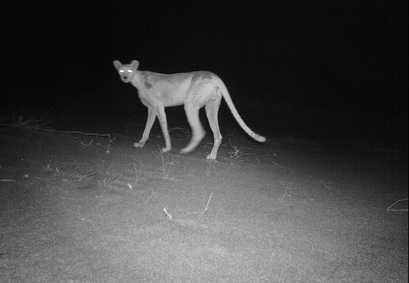 |
| A camera trap recently captured the elusive Saharan cheetah in a vast desert in Niger, Africa. Credit: Sahara Conservation Fund/WildCRU. By Jeanna Bryner, LiveScience Managing Editor |
Saturday, December 18, 2010
در مورد ساعت ساز نابینا و انتشارات مازیار

احساس خوبی است که در این همهمه توانستم دو کتاب را تمام کنم.انتخاب کتاب ترجمه شده ی ریچارد داوکینز یک ریسک بزرگ بود ،از چند نظر هم ریسک آمیز بود : اول این که ترجمه بود !! دوم این که در حوزه ی بیولوژی مولکولی-سلولی،ژنتیک و تکامل با نثر کسی در ابعاد داوکینز نوشته شده است و سوم این که به علت تعلل خودم، این کتاب زمانی مطالعه می شد که یک ذهنیت قوی نسبت به دیدگاه های نویسنده در من ایجاد شده بود. اساسا برای خواندن کتابی که صفحه-صفحه و سطر به سطرمتکی بر قضاوت های عقلانی خواننده است ،این یک نکته منفی است.تا حدودی لذت دریافت دست اول ایده ها ی نویسنده به این ترتیب زائل شده بود.(به عنوان نمونه من این لذت کم نظیر را درسال دوم راهنمایی با خواندن جنایت ومکافات تجربه کردم) اما ورای لذت ،خواندن داوکینز برای من به سان یک باید،یک باید خیلی جدی مطرح بوده و باید به هر حال از یک زمان و یک اثر شروع می شد.در مورد ترجمه ی کتاب میتوانم بگویم روان و یکدست بود و برای خواننده مشکل بزرگی از نظر فهم مطالب ایجاد نمی کرد. این که مترجمین در مواجهه با جمله بندی،کلمات و ارجاعات نویسنده متحمل چه زحمتی شده اند ،قابل تصور است.(جا دارد اشاره کنم که 7فصل اول کتاب توسط مرحوم دکتر محمودبهزاد با همکاری خانم شهلا باقری ترجمه شده و از فصل 8 تا انتهای کتاب را خانم باقری ترجمه و دکتر محمدرضاغفاری ویرایش نموده اند.) قضاوت نهایی درباره ی کیفیت ترجمه بر عهده اهل فن ...اما یک نکته شایان تقدیر در مورد ناشر کتاب است (نشر مازیار)که در وضع اقتصادی موجود و با علم به سلیقه ی کتابخوانی غالب در جامعه،روی این کتاب و این حوزه ی محجور یعنی زیست شناسی تکامل سرمایه گذاری نموده است.
Wednesday, December 15, 2010
Mice Created From Two Males
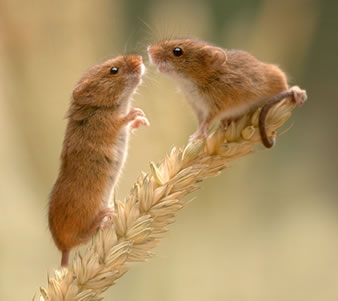
Gay mice couple gives birth to their own genetic child!
According to the study that was published in journal Biology of Reproduction, reproductive scientists in Texas were able to manipulate cells from a male (XY) mouse fetus to produce an induced pluripotent stem (iPS) cell line.
There iPS cells are adult cells that have undergone some genetic reprogramming in order to enter an embryonic stem cell-like state.
Some of the cells that were grown from this new line spontaneously lost their Y chromosome, turning them into XO cells.
Those XO cells were injected into embryos from donor female mice and transplanted into surrogate mouse moms who gave birth to babies with one X chromosome from the original male mouse.
Those babies grew and later mated with normal male mice. There offspring, both male and female, showed genetic contributions from two fathers.
The study was let by Richard R. Berhringer at the MD Anderson Cancer Center.
Researchers said that with a variation of their technique, “it may also to possible to generate sperm from a female done and produce viable male and female progeny with two mothers.”
However, the study cautioned that the ability to replicate the finding in humans was a long way off.
Looks like the first gay mice couple were even able to get their own child!
Saturday, October 30, 2010
The Challenge Hypothesis
When Barack Obama won the American presidency in 2008 his supporters cheered, cried, hugged—and in many cases logged onto their computers to look at pornography( :)) ). And, lest Republicans crow about the decadence of their opponents, precisely the obverse happened when their man won in 2004.
That, at least, is the conclusion of a study by Patrick Markey of Villanova University, in Pennsylvania, and his wife Charlotte, who works at Rutgers, in New Jersey. The Markeys were looking for confirmation of a phenomenon called the challenge hypothesis. This suggests that males involved in a competition will experience a rise in testosterone levels if they win, and a fall if they lose.
The challenge hypothesis was first advanced to explain the mating behaviour of monogamous birds. In these species, males’ testosterone levels increase in the spring, to promote aggression against potential rivals. When the time comes for the males to settle down and help tend their young, their testosterone falls, along with their aggressive tendencies.
Something similar has since been found to apply to fish, lizards, ring-tailed lemurs, rhesus monkeys, chimpanzees—and humans. In many of these animals, though, there is a twist. It is not just that testosterone ramps up for breeding and ramps down for nurturing. Rather, its production is sensitive to a male’s success in the breeding competition itself. In men, then, levels of the hormone rise in preparation for a challenge and go up even more if that challenge is successfully completed. Failure, by contrast, causes the level to fall
Previous research has found these hormonal ups and downs in male wrestlers, martial artists, tennis players, chess players and even people playing a coin-flip game. In evolutionary terms, it makes sense. If a losing male continues to be aggressive, the chances are he will be seriously injured (it is unlikely natural selection could have foreseen competitive coin-tossing). Turning down his testosterone level helps ward off that risk. Conversely, the winner can afford to get really dominant, as the threat of retaliation has receded.
For most species, determining that this actually happens requires a lot of boring fieldwork. But the Markeys realised that in the case of people they could cut the tedium by asking what was going on in those parts of the web that provide a lot more traffic than their users will ever admit to, on the assumption that men fired up by testosterone have a greater appetite for pornography than those who are not.
To do this they first used a web service called WordTracker to identify the top ten search terms employed by people seeking pornography (“xvideos” was the politest among them). Then they asked a second service, Google Trends, to analyse how often those words were used in the week before and the week after an American election, broken down by state.
Their results, just published in Evolution and Human Behavior, were the same for all three of the elections they looked at—the 2004 and 2008 presidential contests, and the 2006 mid-terms (in which the Democrats made big gains in both houses of Congress). No matter which side won, searches for porn increased in states that had voted for the winners and decreased in those that had voted for the losers. The difference was not huge; it was a matter of one or two per cent. But it was consistent and statistically significant.
If the polls are right, then, next Tuesday’s mid-term elections will see red faces in the red states for those furtive surfers who are caught in the act. In the blue states, meanwhile, a fit of the blues will mean the screens stay switched off.
Subscribe to:
Posts (Atom)