
George Vosburgh, Director
Stephen Story, Associate Director
Bobbi Zimmmelman, clarinet
Camden Wentz, cello
George Vosburgh, Director
Stephen Story, Associate Director
Bobbi Zimmmelman, clarinet
Camden Wentz, cello
I'm dedicating this post to a far-gone event I attended in April.
Throughout the years, I have enjoyed faculty recitals at Carnegie Mellon University so interesting. The series has been very educational, and intricately selected works opened new horizons and introduced new artists to me.
The last event I could attend was the solo cello performance by Angela Park.
The repertoire for that musical evening was eclectic:

Ingemisco, tamquam reus:
Culpa rubet vultus meus:
Verdi's Requiem is considered one of the greatest choral works arranged on Requiem text, a Catholic funeral mass.
Originally scored for double chorus, four soloists, and orchestra. With the vast musical scale and formidable force, the performance requires concert halls rather than churches.
Directed by Dr. Susan Medley
I attended this concert on March 2nd.

December 1st, 2024

The repertoire consisted of:
Arvo Pärt's Cantus in Memoriam Benjamin Britten
Mozart's Piano Concerto No. 23 in A Major K. 488
and Beethoven's Symphony No. 7 in A Major, Op. 92


The theme of my symphony is the making of a man. I saw Man with all his experiences in the center of the composition, which is lyrical in form from beginning to end. The finale is the optimistic solution of the tragically tense moments of the first movement.
Shostakovich on Symphony No. 5
This epitomizes the composer's wry sense of humor pointing at his critics. It is a scherzo with a goofy vibe, a spoof on waltzes. The movement is also a hommage to Gustav Mahler (one of Shostakcich's favorites) with solos played by the first violin and flute or clarinet generating the dance imagery accompanying it.
Starts with many march-like themes, slowly gaining pace as the movement progresses. This parade-like vibe broadly resembles Mahler's tradition (again!) in composing finales. As one expects, the symphony needed an upbeat and cheerful ending. At first glance, this seems to be a forced prosaic ending for an otherwise masterfully written symphony. But the master is at work again conjuring up layers of subtle textures. A slow march pays homage to the opera Boris Gudonov where masses praise the tsar. However, this one is bleak and a slow march. In the more upbeat part, Shostakovich deliberately altered a note again and completely changed the mood of the music. This time an alteration from B natural to B ♭ does the magic! It may look bizarre in the context of happy-ending tunes, but this is deliberately executed by the composer. The whole new minor tone foreshadows the preceding upbeat part of the movement.
Shostakovich's Fifth Symphony is a prime example of artistic resilliance and defiance in the face of calamity and censorship. Where individuality had to be sacrificed in the name of patriotic nationalist aesthetic. Shostakovich to me epitomizes working under impossible conditions and having the cutting-edge prowess to please both sides: he includes the cosmetics to satisfy the harsh criteria of an oppressive regime, Meanwhile, he manages to insert the subtle elements to keep the music authentic. The fifth symphony fakes glory and buys him some time to breathe with standard glorious movements placed in it. But the music hints at a tragic underlying story with multiple tunes and tricks inserted masterfully in it.
Socially conscious artists reflect on society and its afflictions. They give tongue to those who were silent or were made silent. They picture an era for those who could not witness or closed their eyes on it. Similarly, Shostakovich's music mirrors his era; living under constant threats and brave masks that people were forced to wear. We are lucky that a genius lived and dared to work under immense pressure and duress. He worked and left a body of work which are quite diverse and influenced by various inspirations. From his chamber music, trios, and string quartets to symphonies to his experiments with jazz music following his trip to the US, this massive body of work shares one characteristic of social awareness. Symphony number five is an emotionally charged and complex masterpiece with hidden layers of meaning.

Franz Schubert, Violin Sonata No 2 in A Minor, D. 385
Dmitri Shostakovich, Piano Trio No 2 in E minor, Op. 67
Featured musicians:
Alexi Kenney, violin
Dimitri Papadimitriou, piano
Anne Martindale Williams, cello

The concept and splendor of this opera captivated me:
The main characters are as follows
Inspired by the original myth, Wagner wrote Flying Dutchman as a wayward ghostly character doomed to futile travels in the hope of redemption.
These seven-year cycles are the result of an act of defiance by the Dutchman before God. The spell will only be broken once the sailor can find faithful love. That is the hope of the captain "The Dutchman" every seven years when he guides the vessel ashore. The Daland's ship is swayed from their home harbor by an oversight of a young Steerman deceived by romantic fantasies. The deviation leads to a fateful encounter with the ghostly dark vessel with blood-red sails.
Daland faces the Dutchman who lays out his ordeal and promises all his treasure and possessions in return for getting to know Senta.
The encounter takes place eventually once the ship lands and Senta recognizes the mystic ideal gentleman she had cherishfully envisioned all along, in the Dutchman.
At the shore, there are scenes of Dalan's ship personnel rejoicing and celebrating with the port residents. However, their party met its end once the ghostly ship crew, reflecting the gloomy and dark status of their captain, infiltrated into the land.
In a different scene the old desperate suitor, Erik, is reproving Senta and singing of good old times of romantic engagement with Senta. These scenes are secretly monitored by the Dutchman who feels the promise of love has turned to false hope. In a desperate act of hopelessness, the Dutchman leaves to the dark vacuum of his ship, leaving Senta distraught. She climbs to the top of a cliff and jumps to the water as she restates her eternal commitment to Dutchman. As a consequence, the dark vessel dismantles and eventually sinks.
Next, we see the Dutchman and Sneta together clad in white, ascending in joy. The protracted spell is broken and the Dutchman is liberated, finally.

Nancy Galbraith: A Festive Violet Pulse
Antonín Dvořák: Symphony No. 7 (First Movement)
Mozart: Symphony No. 41 in C major, K. 551, "Jupiter"
Sarah Gibson: to Make this Mountain Taller
Sergei Prokofiev: Romeo and Juliet
George Gershwin: The Real McCoy "Walking the Dog"
Manuel de Falla: Three-cornered Hat
PSO
Conducted by Jacob Joyce
Tuesday, 10/10/23

Rachmaninoff's opera Aleko (1892) is based on Pushkin's poem The Gypsies. It tells a tragic love story between Aleko, a Russian, and a free-spirited gypsy girl Zemfira.

Attended on June 6th, and it was a special day with nice weather. I was slacking off after a nervy day.
A cool breeze on my skin, with great tunes and a heavy heart.
Pedram, 6/7/22

The version I listened to, is conducted by Pavel Kogan for the Moscow State Symphony Orchestra.
Man, this strikes a chord with me. Partly reminds me of some of Mahler's works.

One of the favorite parts of this whole series.
RIP Mr. Jeremy Brett.

What a fantastic performance! It was truly moving with layers and layers of symbolic personas and the philosophical undertow. Mozart died around 10 weeks after writing the Magic Flute. Maybe I attended this opera in the nick of time!
Tuesday, 11/9/2021
(With fever and chills)

Another outstanding evening with the Pittsburgh Symphonic orchestra. (PSO)
The program comprised Beethoven's Egmont, the "Wings of the Dream" or (Aile du Songe) by Kaija Saariaho, and Mendelssohn's Scottish symphony. The contemporary piece was composed by the Finnish musician, Kaija Saariaho, (born 1952), and is a concerto for flute and orchestra. It was superbly played by the principal flute of PSA, Lorna McGhee. Beautiful music resembling the flight of a bird.
Sunday, harbored a lot of emotions as I was constantly wrestling with recent developments in my life.
Pedram, 10/17/2021
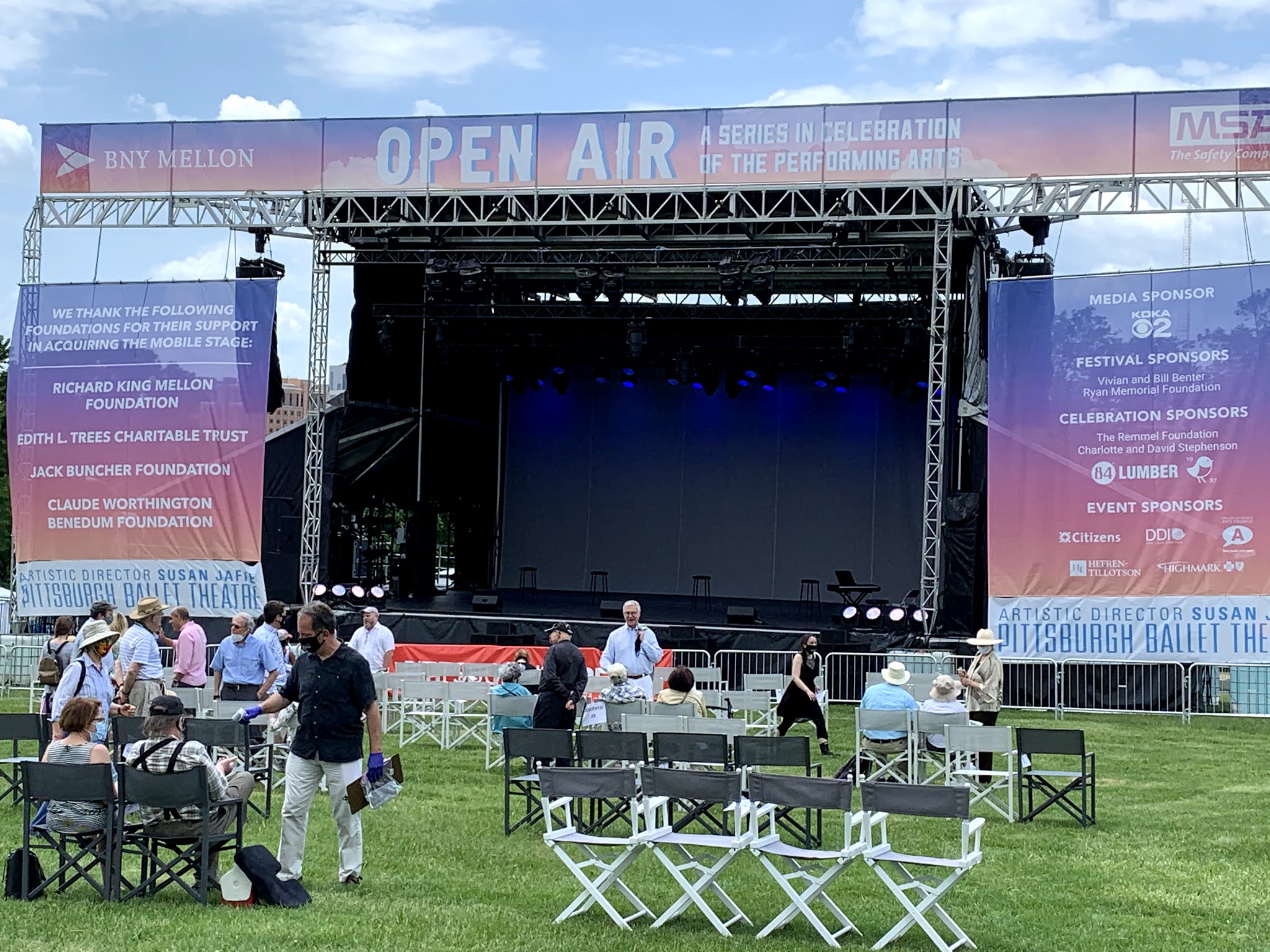
Last Sunday was a fascinating performance and more importantly a celebration of a new season in our social functions.
The playlist included the following:

I have bought Rachmaninoff's complete orchestral works conducted by
Pavel Kogan and Evgeny Svetlanov. Particularly, I have listened to Symphonies No. 1 and No. 2 and they are truly moving. I am listening to digital versions and I can just imagine how this pleasure would have been enhanced listening to these symphonies live or on vinyl.
Maybe someday!


