Showing posts with label Nietzsche. Show all posts

Sunday, May 15, 2022

Nietzsche and The Nazis (Book Review)


A very educative read. Touches on a very controversial intellectual of the modern era and how he might have influenced Nazism.
The blueprints are timeless and can be interpreted in any context. The author well describes the antagonists of Nazi ideology:
1- Individualism against collectivism
2- Science, philosophy of reason, and logic against passion and instincts
3- Productiveness and trade against inclination toward conflict and war
4- Individual freedom as opposed to political authoritarianism and top-down leadership
5- Free market capitalism against socialism promoted by Nazism


Friday, March 20, 2020

Early-career Setbacks: A Mixed Psychological Effect

The following is an excerpt from a very interesting study by Wang et al. 
You can find the full-text here: https://arxiv.org/pdf/1903.06958.pdf

“Science is 99 percent failure, and that’s an optimistic view”, said Robert Lefkowitz, who was awarded the Nobel prize in 2012 for his groundbreaking studies of G protein-coupled receptors. Despite the ubiquitous nature of failures, it remains unclear if a setback in an early career may augment or hamper an individual’s future career impact. Indeed, the Matthew effect suggests a rich get richer phenomenon where early-career success helps bring future victories. In addition to community recognition, bringing future attention and resources, success may also influence individual motivation, where positive feedback bolsters self-confidence. Together, these views indicate that it is early-career success, not failure, that would lead to future success. Yet at the same time other mechanisms suggest that the opposite may also be true. Indeed, screening mechanisms suggest that, if early-career failures screen out less-determined researchers, early setbacks among those who remain could, perhaps counterintuitively, become a marker for future achievement. Further, failure may teach valuable lessons that are hard to learn otherwise, while also motivating individuals to redouble effort, whereas success may be associated with complacency or reduced future effort due to utility maximization. Such positive views of failure are reflected in Nietzsche’s classic phrase “what doesn’t kill me makes me stronger”, in the celebration-of-failure mindset in Silicon Valley, and in a recent commencement address by U.S. Supreme Court chief justice John Roberts, who told graduating students “I wish you bad luck.” Overall, these divergent perspectives indicate that the net effect of an early-career setback is unclear. Given the consequential nature of this question to individual careers and the institutions that support and nurture them, and building on the remarkable progress in our quantitative understanding of science, here we ask: Can an early-career setback lead to future career impact?
To offer quantitative answers to this question, we leverage a unique dataset, containing all R01 grant applications ever submitted to the NIH, to examine early-career success and failure. NIH funding decisions are largely determined by paylines derived from evaluation scores. Our empirical strategy harnesses the highly nonlinear relationship between funding success and evaluation score around the funding threshold. Indeed, focusing on individuals whose proposals fell just above and below the threshold allows us to compare observationally-similar individuals who are either near misses (individuals who just missed receiving funding) or narrow wins (individuals who just succeeded in getting funded). Here we focus on junior scientists by examining principal investigators (PIs) whose first application to the NIH was within the previous three years. We combine the NIH grant database with the Web of Science data, tracing their NIH R01 grant applications between 1990 and 2005 together with research outputs by the PIs, measured by their publication and citation records (see Supplementary Note 1 for details). In total, our analyses yielded 561 narrow wins and 623 near misses around the payline.

Published in Nature Communications

Tuesday, September 24, 2013


“He who fights with monsters might take care lest he thereby becomes a monster. And when you gaze long into an abyss the abyss also gazes into you.”

Nietzsche

Tuesday, October 30, 2012

The individual has always had to struggle to keep from being overwhelmed by the tribe. If you try it, you will be lonely often, and sometimes frightened. But no price is too high to pay for the privilege of owning yourself.

Monday, July 16, 2012

خاموش

وتورا با این چه کار!در خاموشترین گاه شب است که شبنم بر سبزه فرو می نشیند !    از کتاب نیچه نوشته ی ژیل دلوز ترجمه ی پرویز همایون پور

Saturday, May 5, 2012

My Author of The Month (January 2012)

File:Nietzsche and Philosophy.JPG

I read "Nietzsche and Philosophy" by french Gilles Deleuze. The key point is the novel and sharp interpretation of then-underrated and unknown german philosopher. The book is concise and fluent, handling the difficult issue masterfully. To me it was an expert synopsis of major themes in Nietzsche's works.
pedram, May 2012

Sunday, May 23, 2010

Empowered


Yesterday i added 5 new books to my bookshelves;i can't express the deep joy i ' ve experienced with reading books in recent months;in these 2 months i added 8 books overall;
April :
1-The Inverted Forest ; J D Salinger

2-Blue Melody ; J D Salinger

3-The Will To Power ; F W Nietzsche
-------------------------------------------------------
Yesterday :
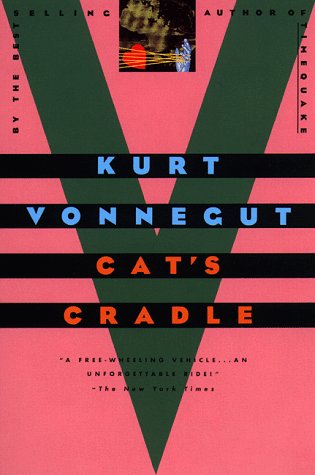
4-Cat's Cradle ; Kurt Vonnegut

5-L'homme Problematique ; Gabriel Marcel

6-A Perfect Night To Go To China ; David Gilmour

7-The Art Of Always Being Right ; Arthur Schopenhauer

8-The Time Of The Hero ; Mario Vargas Liosa


i'm currently reading Consolations Of Philosophy by Alain De Botton translated by Erfan Saabeti (which is an exceptional work) and A Happy Death by Albert Camus translated by Ehsan Lame'a ;
I'm also busy with the heavy philosophy of Hegel : 'Le Malheur De La Conscience Dans La Philosophie De Hegel' (written by Jean Wahl translated by Bagher Parham)

Saturday, December 5, 2009

Thomas Mann


Last night i read a short story written by Thomas Mann entitled : "Embarassment"
it was very touching.
The author is noted as a critique of german soul in the first half of 20th century;influenced by Nietzsche,Schopenhauer ,Wagner ;utilizing modernized German and Biblical myths
i have a collection of shoert stories by german writers and i started with Thomas Mann ; Not Bad Indeed !